Mike and I teamed up together to present Atmosphere. (Unlike anyone else, just US. BACK UP EVERYONE)
Dr. Smirnova asked us to use the website PowToon. Nifty, right?
But it had a very high learning curve. Or is it low? Either way it was difficult. D.I.F.F.I.C.U.L.T.
Mike really took hold of trying to wrangle it into submission. I checkout the minute there wasn't a real toolbox or a way for Mike to share the document/slide he had created with me. I'm a control freak, so having almost no ability to reach over and take over, like I do, was punishment. Although I feel that Mike had the bigger burden.
However, once Mike fought with PowToon and won, he was smitten. The slide becomes a movie, but a fancy and exciting movie. And even better yet, as Justin pointed out, most students already know how to use PowToon. Of course they do.
We used the tool for our Atmosphere presentation, in which we both learned a great deal about a subject area we had almost no knowledge in or desire to learn about. By the end of our research and work, I was coming up with ways to bring Atmosphere into the classroom everyday.
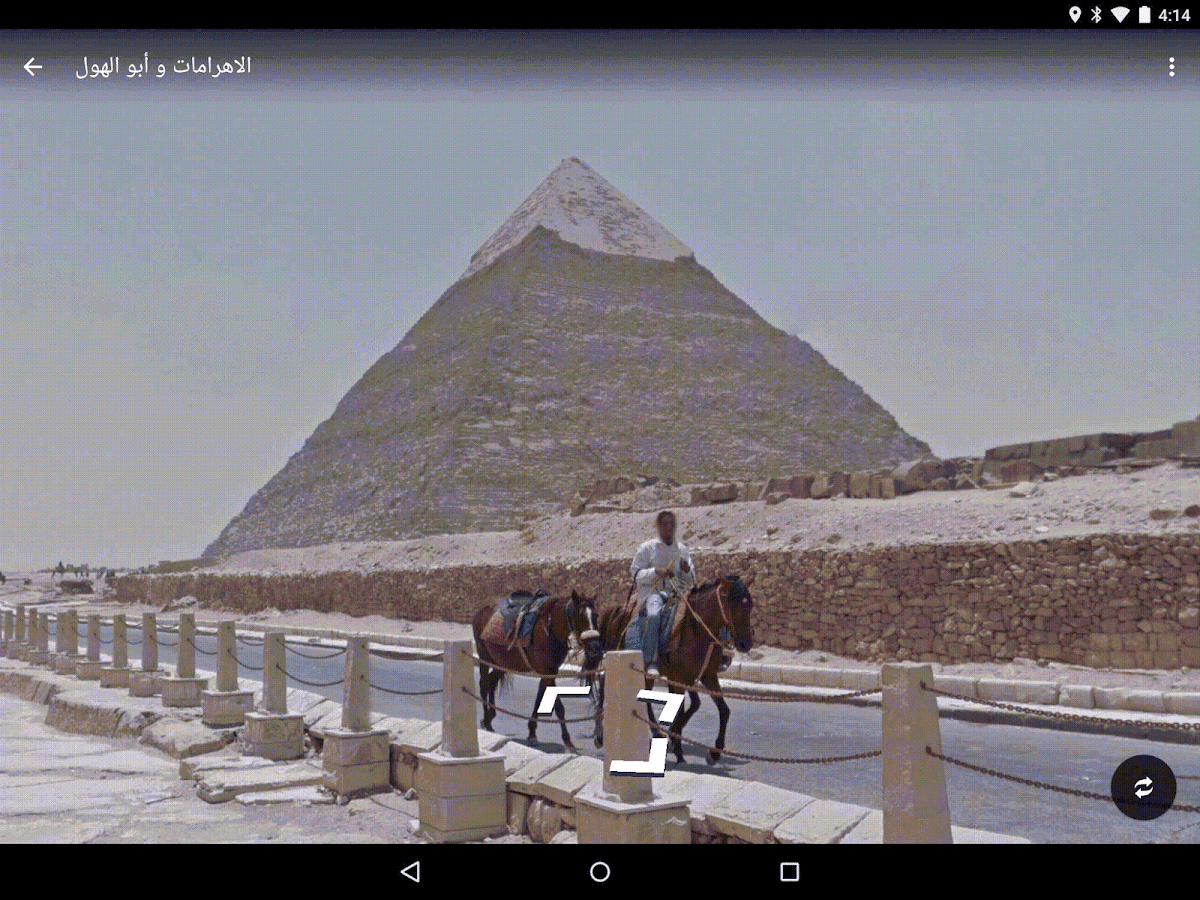
I liked the idea of integrating multiple subject areas. For this example, in my theoretical classroom, I could integrate a city we have been exploring in a non-fiction book (I'm looking at you Common Core) or hopefully a fiction one with a lesson about the atmosphere. I was thinking of using a foreign city, like Venus or Moscow, and checking the weather each morning as a class as part of our morning routine. Since google has google maps that allows people to visually stroll through the city ways/roads/tunnels it would be a great way to introduce geography, history, climate change and technology to my future students.
Oh science. Oh slippery, tangible yet abstract, exciting and tedious, thing. Enter; the Scientific Method.
At first glance, teaching students about the Scientific Method sounds about as fun as teaching students Latin. It sounds impossible, by far. But the reality of science, and teaching students to start donning lab coats in order to become scientists, boils down to the systematic steps of the Scientific Method. Without the method we are lost when it comes to discovery. Once students understand and master the concept of the Scientific Method, students are well on their way to discovery.
As Justin, Amanda and I began plotting out our Unit Plan and focusing out lessons on Life Science, we debated how to introduce the Scientific Method. Did we start off the lesson with jumping into the steps? Is Scientific Method a lesson on its own? We found ourselves at odds, looking at the same picture with different lenses. We decided to place the procedure of the Scientific Method during our Cooperative/Inquiry Lesson Plan.
Now looking back, I think that the Scientific Method should have been taught first, or should have been its own lesson, so that students had a firm grasp of it to begin with. By the end of our time with the Bishop Dunn students, Mike and Colleen presented their lesson entirely on the Scientific Method and the students responded to it eagerly, a surprise to us all. All groups felt some reward, we watched the students implement the facts, tools and procedures that we had spent weeks giving them.
I decided to go on a small hunt on youtube for a video about the Scientific Method. I found a lot of rap videos and awkward teachers making fumbled lyrics about the Scientific Method, all i the name of education. God bless teachers, really.
But I did find a really great video by none other than Cookie Monster. Of course Sesame Street would have a well thought out video about the Scientific Method. I should have known.
I recommend this video for any teachers working on the Scientific Method. I know that Cookie Monster, or Sesame Street in general, is geared towards younger students, but really, it's funny. That's why Sesame Street is brilliant, but I won't ramble on that.
The video covers all aspects of the Scientific Method; Ask a question, Do research, Form a hypothesis, test your hypothesis, analyze data and present your outcomes. And Cookie Monster and scientific guy do it well!
In conclusion, Scientific Method does not have to be a terrifying subject to teach, after all.
Also known in certain circles as Group 4 or to me as Colleen and Mike.
Group 4 introduced the Scientific Method to our extension class. The students at this point really rocked the lesson, they already had done the Scientific Method so many times they could do it in their sleep (maybe).
Also, hold the phone, NAME TAGS?? Brilliant. Colleen and Mike has each child make and design their own name tags as an icebreaker. Which solved the age old quandry our class had: which James am I calling on? We had James F. and Other James. Because that really sets the tone for that kid, Other James. (He's fine) I mean seriously brilliant. Why didn't I think of it? Why? Because I'm not Colleen and Mike. They would think of that. (I AM NOT UPSET).
At this point, the third group, the aforementioned undergrads, really saw the highs and lows of two groups that went before them. The undergrads really put a lot of work into developing their lesson plan. There was clear concrete effort made and utilized and the girls worked together nicely.
Their unit plan was based around geology, specifically rocks. Rocks rock. A pun of a pun. I'll take it. As a huge rock nerd I loved learning even more about rocks, sometimes peering over students shoulders so that I could also take a close look.
The third group had a difficult direct lesson that left some students swimming in the dark. At the end of the lesson, when we all sit around and lament how we did wrong, the undergrads saw their mistake and cringed at the lengthy graphic organizer that kept one student puzzling. Like anything in life, once that pitch has been thrown, it's hard to take it back. And sometimes you have to throw the ball before you can do anything.
I was impressed with the speed and organization of the third group. They were well rehearsed and eager to make a mark. They lacked confidence and communication, but that was to be expected, its a nerve-wracking experience. And they did it well. Thumbs up to Group 3!
What can I say about being Group 2, teaching a whole class instruction?
It's insanity at its finest. I guess I could say that. I could also say that I learned what kind of work goes into preparing a lesson, strengthening my teacher voice and leaning very hard on my partners.
We were saddled with Life Science which sounds all fun and games but IT IS NOT. Life Science is not strictly about pack animals like one of us seemed to think (me), but about the dichotomous key and habitats and gene splitting. WHAT.
Let's move on.
Justin came up with our lesson and found a great idea to launch off of, Harry Potter's Bertie Bott's Every Flavor Beans and the dichotomous key. It was great, it was intense and tedious and gross and fun.
WHYYYYY
Preparing was a nightmare. I also take Methods Social Studies with Dr. S and what I had been praying against all semester came true: I had to conduct a whole class lesson back to back, and start fieldwork for my third class. I didn't cry once this semester but I definitely broke a few things (RIP calculator). On top of that, we had endless snow days on Tuesdays only, which is how that perfect storm of stress came about in the first place.
By the time our whole class lesson came to fruition it felt like I had been held in a holding cell for years on end. It was years, right?
Once Justin and I got in-front of the classroom it all fell into place. We knew our Unit Plan so well that it was like trying on an old coat. We knew that the elbows needed mending and that the blue clashed with the plaid but we were rocking it. And I can say I feel that we did.
We missed a huge step, like the bottom step of a stair case, when we forgot to go through the steps of the Scientific Method, but we recovered from our fumble as gracefully as we could. By the end of the whole saga, we were happy with out result.
The first group to present at Bishop Dunn consisted of: John, Colin, Kelly and Catherine. They had the overwhelming responsibility of carrying the weight of our class, in terms of fieldwork. Almost no one in our class truly had an idea about how the fieldwork would eventually become. We have all worked with students before, and almost everyone in Methods Science has performed fieldwork with Bishop Dunn students in the traditional sense, which means that we work almost one-on-one with anywhere from one to three students at a time for about five weeks. We prepare mini-lessons, or lesson blocks, which cover lessons we will be performing in 45 minute segments with our assigned students. What we were all not used to, by any means, was the idea that we could teach to a whole class.
Dr. Smirnova arranged for us to work with a classroom of third-fourth graders, about 10 total, for an hour and a half. Dr. S broke our class into four groups and gave us lesson frames and examples of what she expected from us. But in reality, none of us knew what to truly expect until we were thrown into the classroom. Colleen, Mike and myself had an insider's peek at the process since we take Methods Social Studies on Mondays with Dr. Smirnova, but science is not social studies.
Therefore, the first group became our leading example. They grappled with this new set of demands and learned by failure and triumph to fulfill Dr. Smirnova's expectations.
And it was a lot.
The group provided excellent activities and the students truly loved every second of it. They loved being scientists and explorers, note takers and taste testers. The first group learned the hard way the standards that Dr. S sets are no joke. They is no gray are or maybe. There is only Dr. S. The first group learned exactly how to conduct a whole class instruction: Direct Lesson, Inquiry and then Cooperative. And within those three lesson is a world of detail. And we all know that the devil really is in the details.
I commend the first group for trying their hand at a difficult task and secretly thank them for all they taught me as I wrote down feverish notes.
I don't think preparing for fieldwork is really possible.
Is it?
You have to mentally prepare yourself to somehow wrangle students you don't know into a room to lecture them and hopefully engage them in a content area they may love or they may hate. On top of that, for this particular class, our fieldwork is on display for our peers as well as for our professor.
So how do you prepare?
You read a lot, research even more and tell yourself that somehow, someway, it will all be okay.
Because for all the stress and run around, gathering materials, losing pages, computers crashing and deciding at the last minute to change your objective, it all boils down to whether or not you walk in that door with personality, performance and an ability to call a child by his name.
For this particular fieldwork experience I will be drawing upon the use of my prior experience in Bishop Dunne. I feel confident that I can work with almost all age groups, that I can engage kids, challenge them and keep the rhythm of a classroom. No easy feat by any means, but it is why I want to become a teacher in the first place.
As I sit here and review the rubrics, glance at the Unit Plan that is still being developed and watch yet another snow day come drifting by, I am excited to get into the classroom!